Eczema or a Damaged Skin Barrier? How to Spot the Difference
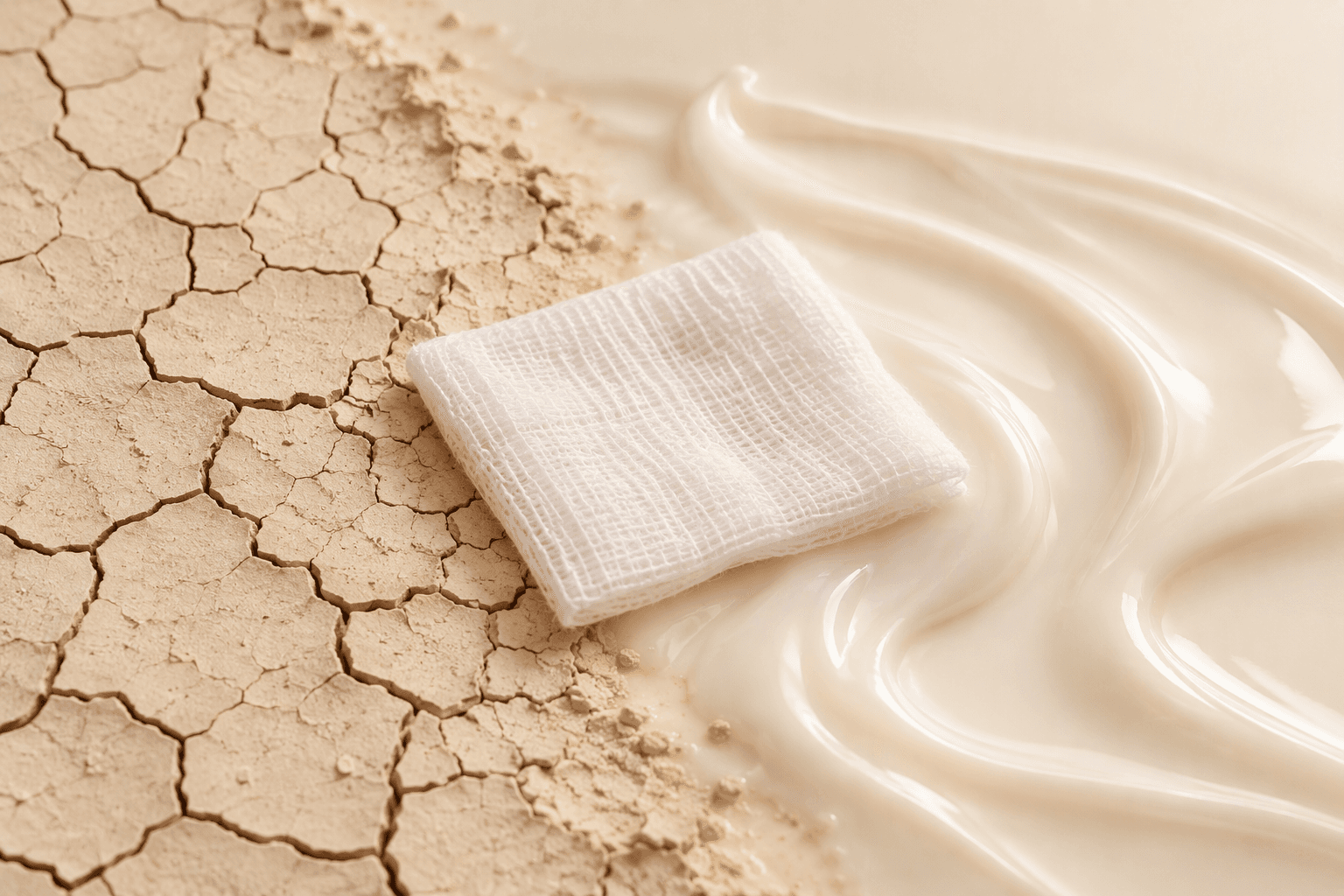
Eczema and a damaged barrier look almost identical: red, itchy, tight, flaky patches that sting when you apply products. But one is a chronic condition that needs medical care, and the other is a self-inflicted routine injury that heals in weeks. Telling them apart matters, because the fixes are different and using the wrong one wastes months.
Why they look identical
The confusion is fair: eczema involves a weakened barrier, and a damaged barrier produces eczema-like inflammation. Both show the same surface signs. The difference is not what your skin looks like today. It is your history, your triggers, and how your skin responds to a simplified routine.
The history test
Eczema usually has a past: dry, reactive skin since childhood, flares that predate your current routine, often alongside hay fever or asthma. Barrier damage has a start date you can name. Things were fine until the new retinol, the acid toner, or the three-actives-in-one-night era began. If your skin changed after your routine changed, suspect the routine first.
The trigger test
Barrier damage tracks product use tightly: it stings where the actives go and worsens on the nights you stack them. Eczema flares from a wider trigger list: stress, cold weather, sweat, fragranced laundry detergent, dust, sometimes nothing identifiable at all. Flares that ignore your skincare calendar point toward eczema.
The location test
Damage concentrates where products land: cheeks, forehead, around the mouth. Classic eczema favors flexures, the inner elbows and behind the knees, plus eyelids, neck, and hands. Eczema on the face absolutely exists, but itchy patches in elbow creases are not caused by your serum.
The response test
This is the most useful one. Strip your routine to a gentle cleanser, a bland ceramide moisturizer, and sunscreen for two weeks. Routine damage improves noticeably within that window, often dramatically. Eczema barely moves with skincare alone, or improves briefly and flares again. A flat response to a perfect routine is a strong signal to stop self-treating.
When to see a dermatologist
Go if the itching disturbs sleep, if patches ooze, crack, or spread, if the two-week reset changes nothing, or if this has been your skin's personality for years. Eczema has real treatments, including prescription anti-inflammatories, and no moisturizer routine is a substitute for them.
If the reset does fix you, the lesson is about the comeback: reintroduce actives one at a time, two weeks apart, and check how they combine before layering. Barrier damage is usually a scheduling problem, and scheduling problems do not need to happen twice.
Common questions
Can over-exfoliating trigger eczema?
It can unmask it. A stripped barrier lets in irritants and allergens that can provoke eczema flares in people already prone to the condition. The over-exfoliation did not cause the eczema, but it removed the defense that was keeping it quiet.
Is a damaged skin barrier permanent?
No. With actives paused and a simple ceramide-focused routine, most barriers recover in two to six weeks. Damage only becomes a long-term problem when the routine causing it never changes.
Should I see a dermatologist or fix my routine first?
If the symptoms started right after a routine change, try the two-week reset first. If you have a lifelong history of reactive skin, patches in joint creases, oozing or cracked skin, or the reset does nothing, see a dermatologist. Skincare can injure a barrier; it cannot cure a condition.
Related guides
Wondering if your products clash?
Scan any two products and get the verdict, the reason, and the schedule that fixes it.
Scan for Conflicts