The Best Barrier Repair Ingredients and Creams for Over-Exfoliated Skin
When your barrier is broken, every product recommendation sounds identical: soothing, repairing, calming. The truth is simpler and cheaper. Barrier repair is a short ingredient list, not a luxury category. Here is what to look for on the label, what to avoid while you heal, and the product types that consistently work.
The three ingredient families that rebuild the wall
Your barrier mortar is made of ceramides, cholesterol, and fatty acids, roughly in equal parts. Creams that combine all three (look for ceramide NP, AP, or EOP alongside cholesterol) replenish what over-exfoliation stripped. Ceramide-only formulas help, but the trio rebuilds faster because you are replacing the actual recipe.
Humectants are the second family: glycerin, hyaluronic acid, and panthenol pull water into the skin so the new mortar has something to hold in. The third family is occlusives: petrolatum, dimethicone, and squalane sit on top and stop water escaping while repairs happen underneath. A good repair routine uses all three.
What to avoid while repairing
Fragrance and essential oils, even 'natural' ones like lavender or tea tree, are common irritants and your skin is currently bad at keeping irritants out. Denatured alcohol high on the ingredient list stings and dries. And obviously: no retinol, no vitamin C serums, no acids, no scrubs, no cleansing brushes. The repair window is boring on purpose.
The product types that work
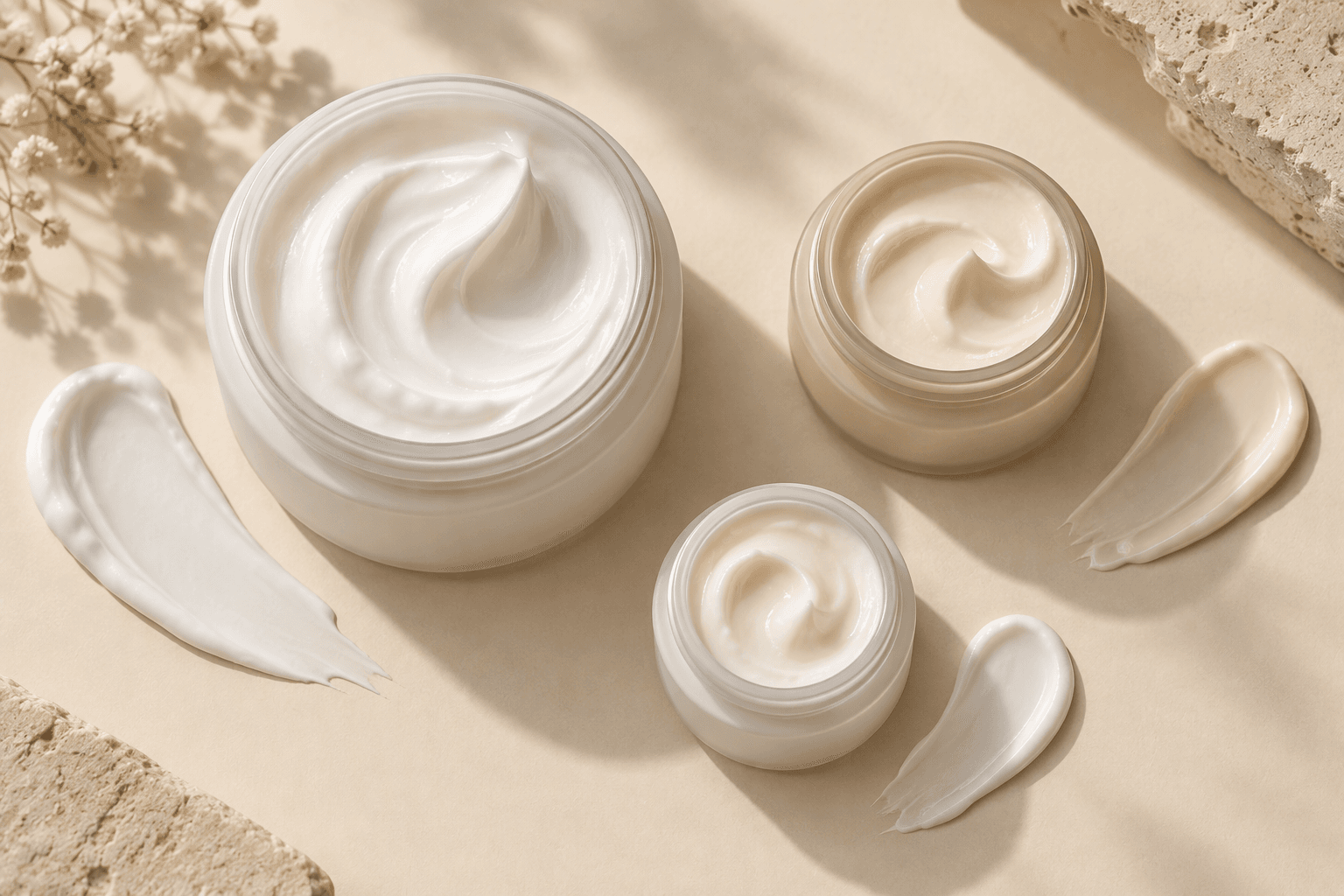
The workhorse is the bland ceramide cream: the CeraVe and Vanicream tier of the drugstore. Unsexy packaging, short ingredient lists, ceramide-cholesterol blends, no fragrance. This is the correct default for almost everyone.
The second type is the cica balm, like the La Roche-Posay Cicaplast style of thick, centella-based creams: useful as a spot treatment for the angriest patches. The third is a plain occlusive for the final night step: a thin layer of petrolatum over your moisturizer, the move people call slugging, which cuts overnight water loss dramatically while the ceramides work.
Claims to ignore
Long botanical ingredient lists read as gentle and often are not. 'Barrier repair' printed on a jar that also contains glycolic acid is marketing, not medicine. Price correlates with fragrance budget more often than with ceramide content. Read the ingredient list, not the front of the tube.
The boring protocol that works
Morning: rinse with lukewarm water or a gentle cleanser, apply the ceramide cream to slightly damp skin, finish with sunscreen. Night: gentle cleanse, ceramide cream on damp skin, thin occlusive layer on top. Nothing else for two to four weeks. Tightness fades first, stinging next, redness last.
When your skin feels normal for a full week, reintroduce actives one at a time with two weeks between additions. And scan each pair before layering: most barriers break from combinations, so the comeback should be scheduled, not stacked.
Common questions
Is slugging good for a damaged barrier?
Yes, as the final step at night. A thin layer of petrolatum over moisturizer sharply reduces overnight water loss, which is the main thing slowing barrier recovery. Skip it if you are acne-prone on the areas you slug, and never apply it over actives.
Do ceramide creams actually repair skin?
Yes, with a caveat. Ceramide-dominant moisturizers have solid evidence for improving barrier function, and formulas that also include cholesterol and fatty acids rebuild faster because they match the skin's natural lipid ratio. They repair the mortar; they do not fix a routine that keeps damaging it.
Can I repair my barrier while still using retinol?
Realistically, no. Retinol increases water loss while the barrier is trying to rebuild, so you heal slowly or not at all. Pause retinoids and acids for two to four weeks, repair, then reintroduce at a lower frequency.
Related guides
Wondering if your products clash?
Scan any two products and get the verdict, the reason, and the schedule that fixes it.
Scan for Conflicts